
FREE SYMPOSIUM OF AMB. JUAN

Friday, March 17, 2023
Saturday, July 11, 2020
#MedicalResearch on #Obesity: Study pinpoints brain cells that trigger sugar cravings and consumption
"The new study, led by Matthew Potthoff, Ph.D., associate professor of neuroscience and pharmacology in the University of Iowa Carver College of Medicine, and Matthew Gillum, Ph.D., at the University of Copenhagen in Denmark, focuses on actions of a hormone called fibroblast growth factor 21 (FGF21). This hormone is known to play a role in energy balance, body weight control, and insulin sensitivity.
"This is the first study that's really identified where this hormone is acting in the brain and that has provided some very cool insights to how it's regulating sugar intake," says Potthoff, who also is a member of the Fraternal Order of Eagles Diabetes Research Center at the UI and the Iowa Neuroscience Institute.
Potthoff and his colleagues previously discovered that FGF21 is made in the liver in response to increased levels of sugar, and acts in the brain to suppress sugar intake and the preference for sweet taste.
Building on that finding, the team has now shown, for the first time, which brain cells respond to FGF21's signals and how that interaction helps regulate sugar intake and sweet taste preference. The study, published in the journal Cell Metabolism, also reveals how the hormone mediates its effects.
Although it was known that FGF21 acted in the brain, identifying the exact cellular targets was complicated by the fact that the hormone's receptor is expressed at very low levels and is therefore difficult to "see." Using various techniques, the researchers were able to precisely identify which cells express the receptor for FGF21. By investigating these cells, the study shows that FGF21 targets glutamatergic neurons in the brain to lower sugar intake and sweet taste preference. The researchers also showed that FGF21's action on specific neurons in the ventromedial hypothalamus reduce sugar intake by enhancing the neurons' sensitivity to glucose.
Several drugs based on a modified form of FGF21 are already being tested as treatments for obesity and diabetes. The new findings could potentially lead to new drugs that more precisely target the different behaviors controlled by FGF21, which might help to control how much sugar a person eats."
For study reference source:
https://medicalxpress.com/news/2020-07-brain-cells-trigger-sugar-cravings.html


Sunday, June 28, 2020
UN calling for recovery plans to be built around low-carbon technologies
27 June 2020
As governments try to
kick-start their economies, the UN is calling for recovery plans to be built
around low-carbon technologies, to avoid a return to fossil fuel-based business
as usual.
Islands at the
forefront
Some of the countries
and regions at the forefront of this wholescale shift to renewables are
islands, where the need to avoid the significant cost of importing fossil
fuels, such as oil and gas, provides added motivation.
Mauritius, for
example, is planning to generate over a third of its electricity from renewable
sources within the next five years. Projects supported by the UN Development
Programme (UNDP), will be an important part of this transition, bringing an additional
25 Mega Watts of solar power to Mauritius, including a mini-power grid in
Agalega, one of the outer islands.
At the current pace, it would take the world
forever to come anywhere near a no-carbon system. Rana Adib, Executive
Director, REN21
As well as reducing
pollution, this shift to clean energy is expected to aid economic recovery,
with new jobs in areas such as the production, installation, and maintenance of
renewable energy equipment, from solar panels, to batteries and wind turbines.
Another added benefit
is energy security: with such a high dependence on imported oil, price
fluctuations can make budgeting difficult, and any interruption to supply can
have serious consequences. “Home-grown” energy from renewable sources can make
the energy grid more reliable, and more resilient.
The Pacific US State
of Hawaii is planning to go even further and become a trailblazer for the rest
of the United States, by going completely renewable by 2045. As Hawaii State
Governor, David Ige, explained to UN News, their commitment is now moving to
the mainstream: “at the time we enacted the law to commit to 100 per cent
renewables, no other community had done anything similar and at the National
Governors’ Association, people were generally very surprised.
They thought that it
was so beyond possible that it was a foolish undertaking. Now, California has
embraced the commitment to 100 per cent clean renewable energy and other states
are contemplating doing the same. I’m proud that Hawaii has really inspired other
states and communities.”
Time to change the
entire energy system
As economies recover
post-pandemic, following these examples will be essential to turn the tide and,
as a new report from REN21 – a renewable energy think tank that includes the UN
Environment Programme (UNEP) and UN Development Programme (UNDP) amongst its
members – shows, remarkable progress has been made by the renewable energy
industry, where costs are falling, and clean energy use is increase.
However, this good
news is currently offset by the fact that global energy use is rising, and is
being powered, in the main, by fossil fuels. Following the release of the
report, on 16 June, Rana Adib, REN21’s Executive Director, underlined the fact
that the pandemic-related emissions drop barely makes a dent in the long-term
problem of climate change, and an overhaul of the entire energy system is
needed:
“Even if the lockdowns
were to continue for a decade, the change would not be sufficient. At the
current pace, with the current system and current market rules, it would take
the world forever to come anywhere near a no-carbon system.”
The report warns that
many recovery programmes include commitments to stick with dirty, polluting
fossil fuel systems: whilst some countries are phasing out coal, others
continue to invest in new coal-fired power plants. In addition, funding from
private banks for fossil fuel projects has increased each year since the
signing of the 2015 Paris climate agreement, totalling some USD 2.7 trillion
over the last three years.
“Some directly promote
natural gas, coal or oil. Others, though claiming a green focus, build the roof
and forget the foundation,” warned Ms. Adib. “Take electric cars and hydrogen,
for example. These technologies are only green if powered by renewables.”
Clean is
cost-effective
Nevertheless,
Mauritius and Hawaii show that a green option is not only possible, but
actually a better deal than a fossil-fuel based recovery plan, especially when
the true costs, including air pollution, climate change effects and traffic
congestion, are factored in.
A new book from the
World Bank, Technology Transfer and Innovation for Low-carbon Development,
shows that most of the emissions reductions needed to keep global warming to
1.5 degrees above pre-industrial levels, can be achieved if existing,
commercially proven low-carbon technology is adopted on a massive scale.
As Inger Andersen, the
Executive Director of the UN Environment Programme (UNEP) explains, “renewables
are now more cost-effective than ever, providing an opportunity to prioritize
clean economic recovery packages and bring the world closer to meeting
the Paris
Agreement Goals. Renewables are a key pillar of a healthy, safe
and green COVID-19 recovery
that leaves no one behind.”
When Global Trends in
Renewable Energy Investment 2020, a report from UNEP, The Frankfurt School, and
Bloomberg New Energy Finance, was released in June, it further underlined the
plummeting costs of clean energy, highlighting the fact that “putting these
dollars into renewables will buy more generation capacity than ever before”,
and help countries deliver on stronger climate action.
“If governments take
advantage of the ever-falling price tag of renewables to put clean energy at
the heart of COVID -19 economic recovery, instead of subsidizing the recovery
of fossil-fuel industries”, said Ms. Andersen, “they can take a big step
towards clean energy and a healthy natural world, which ultimately is the best
insurance policy against global pandemics.”
An opportunity for a
cleaner world
The economic slowdown
resulting from the COVID-19 pandemic has seen a significant fall in harmful
greenhouse emissions and, according to the International Energy Agency (IEA),
2020 will see a drop of around eight per cent.
This has given us an
idea of what a cleaner world might look like, but it is only a temporary
respite: it has also had devastating consequences, including the shuttering of
entire sectors, and unemployment for millions of people.
Now, with countries
and regions like Mauritius and Hawaii investing in policies, programmes and
initiatives to get people back to work, there is an opportunity for a more
sustainable approach, with renewable technologies at its heart. The question is
whether the international community will seize this opportunity, or stick with
the devil they know.
Thursday, February 20, 2020
Thursday, November 14, 2019
WHO launches first-ever insulin prequalification programme to expand access to life-saving treatment for diabetes

The World Health Organization (WHO) announced 13 November 2019
the start of a pilot programme to prequalify human insulin to increase treatment for diabetes in low- and middle-income countries.
The decision, announced ahead of World Diabetes Day (14 November), is part of a series of steps WHO will take to address the growing diabetes burden in all regions. About 65 million people with type 2 diabetes need insulin, but only half of them are able to access it, largely due to high prices. All people with type 1 diabetes need insulin to survive.
“Diabetes is on the rise globally, and rising faster in low-income countries,” says Dr Tedros Adhanom Ghebreyesus, WHO Director-General. “Too many people who need insulin encounter financial hardship in accessing it, or go without it and risk their lives. WHO’s prequalification initiative for insulin is a vital step towards ensuring everyone who needs this life-saving product can access it.”
Insulin prequalification can lead to lower prices
WHO prequalification of insulin is expected to boost access by increasing the flow of quality-assured products on the international market, providing countries with greater choice and patients with lower prices.
Insulin was discovered as a treatment for diabetes almost 100 years ago and has been on WHO’s List of Essential Medicines since it was published in 1977.
Despite an ample supply, insulin prices are currently a barrier to treatment in most low- and middle-income countries. Three manufacturers control most of the global market for insulin, setting prices that are prohibitive for many people and countries.
Access to insulin a challenge in many countries
Data collected by WHO in 2016-2019 from 24 countries on four continents showed that human insulin was available only in 61% of health facilities and analogue insulins in 13%. The data showed that a month’s supply of insulin would cost a worker in Accra, Ghana, the equivalent of 5.5 days of pay per month, or 22% of his/her earnings.
In wealthy countries, people often have to ration insulin, which can be deadly for people who do not get the right quantity of the medicine.
“Prequalifying products from additional companies will hopefully help to level the playing field and ensure a steadier supply of quality insulin in all countries,” says Dr Mariângela Simão, Assistant Director General for Medicines and Health products.
More than 420 million people live with diabetes. Diabetes is the seventh leading cause of death and a major cause of costly and debilitating complications such as heart attacks, stroke, kidney failure, blindness and lower limb amputations.
People with type 1 diabetes need insulin for survival and to maintain their blood glucose at levels to reduce the risk of common complications such as blindness and kidney failure. People with type 2 diabetes need insulin for controlling blood glucose levels to avoid complications when oral medicines become less effective as the illness progresses.
Insulin prequalification is one of a number of steps WHO will take in the coming year to address the diabetes burden. Plans are underway to update diabetes treatment guidelines, devise price reduction strategies for analogues and improve delivery systems and access to diagnostics. WHO also works with countries to promote healthier diets and physical activity to lower people’s risk of developing type 2 diabetes.
Note to editors
The WHO Prequalification of Medicines Programme contributes to accelerating and increasing access to critical medical products that are quality-assured, affordable and adapted for markets in low- and middle-income countries.
The programme does this by evaluating medical products developed by manufacturers to ensure their quality, safety and efficacy, in turn expanding the pool of available quality medicines.
Evaluating and prequalifying health products then guides international procurement agencies, such as the Global Fund, Gavi, the Vaccine Alliance, and UNICEF, and increasingly countries to make bulk purchases of medicines vaccines, diagnostics and other critical products at lower prices.
Wednesday, October 23, 2019
UN to World Bank: Convert debt to investment in resilience such as through the Debt for Climate Adaptation Swap initiative” for Small Island Developing States
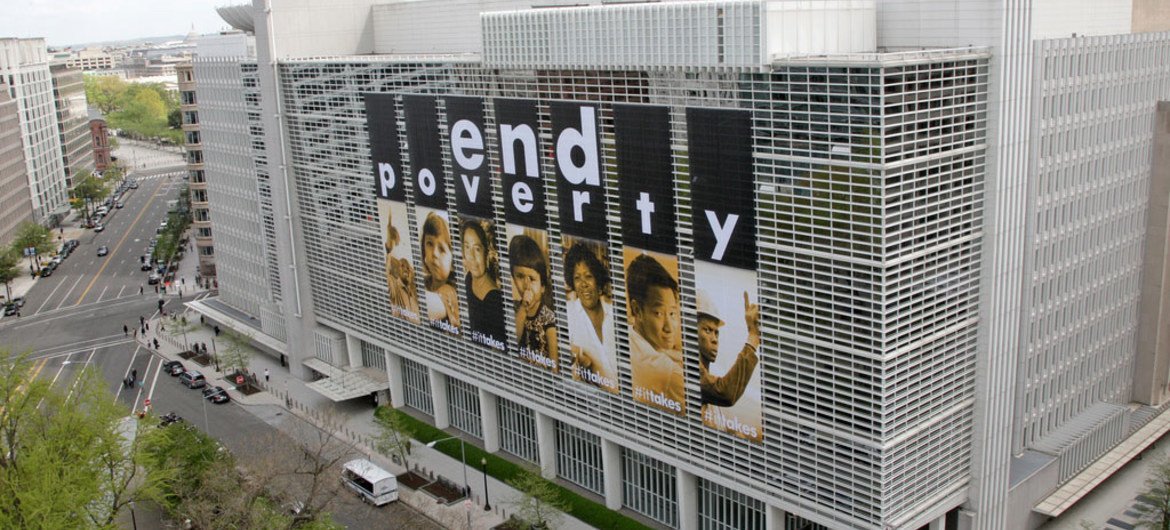
World Bank Headquarters, Washington DC. Photo: World Bank/Simone D. McCourte
19 October 2019
Economic Development
Tensions around global trade and technology continue to rise and the international community needs to “do everything possible” to prevent the world being split into two competing spheres, led by the United States and China.
That was the message from UN Secretary-General António Guterres on Saturday, speaking during the World Bank Group and International Monetary Fund (IMF) Annual Meetings in Washington DC.
In remarks to the International Monetary and Financial Committee, the UN chief said that "during tense and testing times" he continued to “fear the possiblity of a Great Fracture – with the two largest economies splitting the globe in two – each with its own dominant currency, trade and financial rules, its own internet and artificial intelligence capacities and its own zero-sum geopolitical and military strategies.”

UN Spokesperson
✔@UN_Spokesperson
At the #WBGMeetings, @antonioguterres stressed we must do everything possible to maintain a universal economy with respect for international law; a multipolar world with strong multilateral institutions, such as the @WorldBank & @IMFNews. His remarks: https://www.un.org/sg/en/latest/sg/statement …
A trade war between the two economic giants is threatening to wipe out gains across the global economy, which could shrink global GDP next year “equivalent to the whole economy of Switzerland” said the new head of the IMF, Kristina Georgieva, just a few days ago.
Mr. Guterres told world financiers that “it is not too late to avoid” the division, but “we must do everything possible to avert this...and maintain a universal economy with universal respect for international law; a multipolar world with strong multilateral institutions, such as the World Bank and IMF.”
He noted three main areas where fiscal policy and investment in the future would be pivotal. First, make tax systems “smarter, greener, and more aligned behind the sustainable development and climate action agendas”, he urged.
Secondly align the whole financial system behind the 17 SDGs, or Sustainable Development Goals, incentivizing longterm public and private finance, and “revisiting financial regulations that may inadvertently encourage short-termism in financial markets.”
Third, “it is time to break the cycle of excessive debt build-up followed by painful debt crises”, meaning taking a systemic approach to lend and borrow more responsibly.
And we must keep a focus on countries particularly vulnerable to the impacts of the climate crisis, namely Small Island Developing States. I fully support proposals to convert debt to investment in resilience such as through the Debt for Climate Adaptation Swap initiative”, noted the UN chief. “We should move this from idea to reality.
Together, let us raise ambition for development finance, climate finance, and finance that is inclusive and enables markets to grow, businesses to thrive and people to live in dignity.”
‘Great opportunities’ ahead, for #climateaction
Speaking at a meeting of the Coalition of Finance Ministers for Climate Action, Mr. Guterres said that the 44-member group launched just six months ago, was “a vital part of our response to the climate emergency”.
The Climate Action Summit last month in New York had shown “the world is waking up to the crisis”, with “great opportunities” ahead to reduce air pollution, save billions of dollars on disasters fueled by global warming, and unlock the true benefits of the green economy.
Despite a “glaring gap in ambition and finance” finance ministers can turn the tide: “You come to the table with a mix of tools, including tax policy, controlled spending and climate budgeting...And you can end counter-productive subsidies for fossil fuels and pave the way for what I would like to see as a major trend: shifting taxation from income, to carbon.”
Sweden and Colombia are already using carbon taxes; Uganda is implementing a Climate Change Budget Tagging System; and the island of Dominica has used fiscal policy to improve preparedness for climate shocks, following a devastating hurricane.
“Your Coalition is taking the ‘whole of government’ approach we need for systemic change. We need to have in place by COP26, country-level road maps and fiscal policies for economic, technological and energy transitions”.
Global economy: ‘we must do everything possible’ to avoid global ‘fracture’ caused by US-China tensions, urges Guterres
Tuesday, October 15, 2019
World Mental Health Day sheds light on worrying rates of youth suicide -WHO 10 October 2019

Worldwide, 800,000 people die by suicide each year - one every 40 seconds - making it the second leading cause of death among young people (aged 15 to 29), the World Health Organization (WHO) said on Thursday, spotlighting suicide prevention as the theme for this year's World Mental Health Day.
“Mental health has been neglected for too long,'' Secretary-General António Guterres said in a video message for the Day, saying it needs to be addressed urgently, as a matter "that concerns us all.”
“We need stronger investments in services. And we must not allow stigma to push people away from the assistance they need. I am speaking my mind because I care deeply” he said, “there is no health, without mental health.”
The World Health Organization (WHO), supporting this year’s international Day, has said that each year, the proportion of suicides accounts for more deaths than war and homicide combined.
A well-established link exists between mental health and suicide in developed countries, and the trauma from experiencing disaster, violence and abuse, are also strongly associated with suicidal behavior, according to the agency’s latest figures, published last month, ahead of World Suicide Prevention Day.
In the past, the United Nations and partners have drawn attention to different aspects of mental health on the World Day, from mental health in relation to children, the workplace, stigmatization of issues, and psychological first aid - or ways in which to lend support to the distressed.
This year, WHO and global partners are echoing the call of September’s World Suicide Prevention Day through promotion of the “40 seconds of action campaign”, aimed at raising awareness of suicide around the world, and methods of prevention.
To date, only a few countries have included eliminating suicide among their health priorities, and only 38 report having a national prevention stategy, WHO reports. Though suicides are preventable, stigma and taboo surrounding mental health have not been addressed in many societies.
Reduction measures can be taken by individuals and society at large, to prevent suicide and suicide attempts - here are some of WHO's recommendations:
Reducing access to the means of suicide.
Responsible media reporting on the topic.
School-based interventions.
Early identification, treatment and care of people with mental and substance abuse disorders.
Training of non-specialized health workers in the assessment and management of suicidal behaviour.
Follow-up care for people who attempted suicide and provision of community support.
In a move to ensure a healthy work environment for its staff, the United Nations implemented a framework of mental health resources best practices for its thousands of staff, in 2018.
WHO’s Mental Health Gap Action Programme (mhGAP), launched globally in 2008, serves as an evidence-based guide to scale up services for mental, neurological and substance use disorders.
It’s 2013-2020 action plan sets a global target of reducing suicide rates by 10 per cent by 2020, in line with the UN’s Sustainable Development Goals, which sets a target of cutting suicide rates by one third up to 2030.
In a joint mission targeting youth, WHO in partnership with the UN Children's Fund (UNICEF) will convene a global conference on child and adolescent mental health next month, on 7 November.
World experts and young advocates are set to gather for a three-day consultation in Florence, Italy, to address growing gaps in mental health services for children and young people. Worrying data shows suicide as the leading cause of death among youth aged 15 to 19.
Listen to an exclusive interview on mental health at the UN with Fabrizio Hochschild, the UN Assistant Secretary-General for Strategic Coordination:
World Mental Health Day 2019 focuses on raising awareness of the scale of suicide around the world and the role that each of us can play to help prevent it.
Subscribe to:
Posts (Atom)
Sailing for Peace Coffee Talk

Climate Change Peace Building Adaptation Information Campaign Worldwide