This is a country that decided to measure national happiness, has completely free healthcare, and nobody living on the streets. Sounds unbelievable, but this is all true about Bhutan, and that’s just the tip of the iceberg. So, wanna know why all the people who live in Bhutan are so happy? Let's find out more about their traditions and numerous bans.
.
TIMESTAMPS:
No homeless people at all 0:31
Free healthcare 0:48
Unplugged 1:10
National Dress Code 1:44
No Smoking! 2:14
Ecology is everything 2:48
They like it hot! 3:31
Touring obstacles 4:07
Ladies first 5:00
100% Organic? 5:19
They keep food on the roof 6:12
Only the best pilots are allowed to fly to Bhutan 6:11
Wedding rules 7:00
The Ministry of Happiness 7:47
The road less traveled 8:42
Gingerbread-like houses 9:08
#Bhutan #traveling #brightside
Preview photo credit:
King of Bhutan Jigme Khesar Namgyel Wangchuck and Queen Jetsun Pema, BHUTAN: By NIV/SIPA/EAST NEWS, https://www.eastnews.ru/pictures/pict...
Animation is created by Bright Side.
Music by Epidemic Sound https://www.epidemicsound.com/
SUMMARY:
- If a person loses their home, they just need to go to the king and he’ll give them a plot of land where they can build a house to live in and plant a garden to eat from.
- Each Bhutanese resident has the right to free medical care. The country’s Ministry of Health has made it their goal to become “A nation with the best health.”
- The Bhutanese people take their traditions and unique culture very seriously, and the king took great measures to protect his people from outside influences.
- Speaking of traditions, Bhutanese people are required to wear traditional clothes in public. This nationwide dress code has existed for over 400 years.
- In 2010, the king enacted a law prohibiting the cultivation, harvest, and sale of tobacco, making Bhutan the first country in the world with a total ban on tobacco. It’s impossible to buy it there, and you can’t smoke in public areas.
- Bhutan is really concerned about ecology and nature. According to a local law, at least 60% of the country’s total area must be covered with woods.
- The most popular ingredient in almost every Bhutanese dish is chilies. The Tourism Council even notes “Bhutanese people would not enjoy a meal that was not spicy.”
- You can only go to Bhutan in groups of 3 or more. All documents and visas are issued by a state-appointed company.
- All property and belongings like their homes, cattle, and land go to the eldest daughter, not son. Men are expected to earn their own fortunes.
- It’s already illegal to import or use any chemical products there whatsoever. Everything they use is cultivated within the country and is all-natural.
- Not every pilot can maneuver between mountaintops and land on a 6,500-foot-long highway right by people’s houses. Add strong winds to the challenge, and you’ll understand why take-offs and landings are only allowed during daylight hours. And there are only 8 pilots in the world that can do this.
- If you visit Bhutan, you may fall in love with the land, but try not to fall for a local or else you’ll get your heart broken. It’s prohibited to marry foreigners.
- In 2008, the Gross National Happiness Committee was formed in Bhutan to take care of the people’s inner peace.
- All the road signs in Bhutan are drawn by hand. Thiumphu, the country’s capital, is the only one in the world that has no traffic lights at all.
- Bhutanese people love to decorate their homes. They draw birds, animals, and different patterns on the walls, making them look like real-life gingerbread houses.
FREE SYMPOSIUM OF AMB. JUAN

Monday, September 2, 2019
Tuesday, August 27, 2019
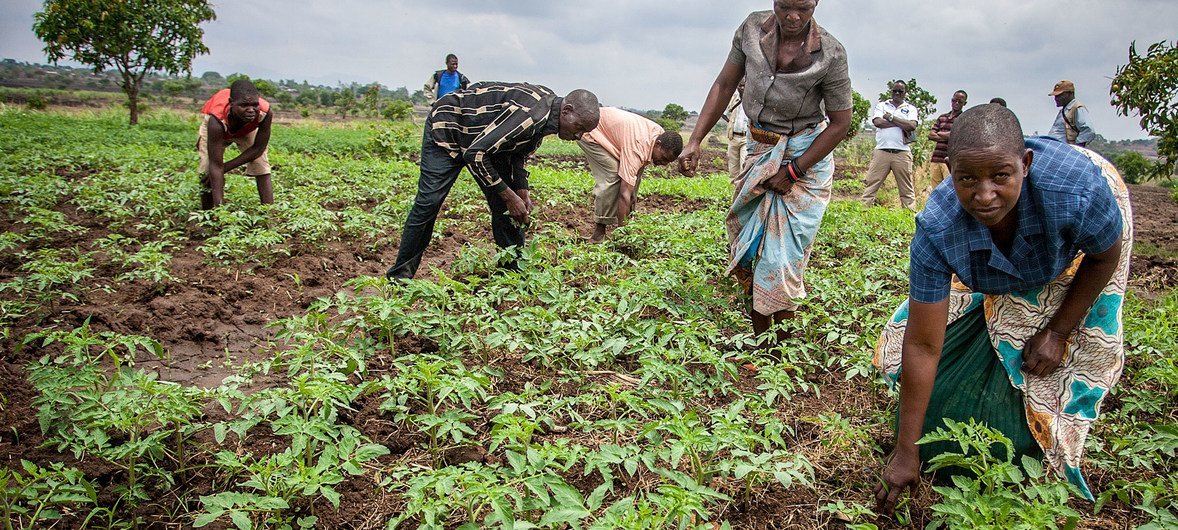
Farmers in Malawi are diversifying their crops and adopting sustainable technologies as they look at ways to adapt to a changing climate.

UNDP Malawi
Some farmers in Malawi have started growing tomatoes as they try to adapt to a change in the climate.
26 August 2019
Climate Change
Around 80 per cent of Malawi’s and indeed the world’s agriculture depends on rain, however rainfall is becoming more erratic forcing farmers to change traditional practices.
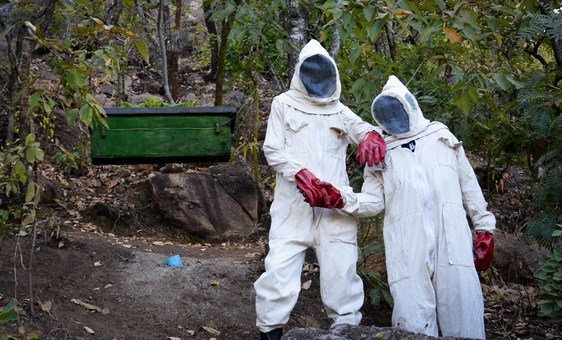
A UN Development Programme-supported (UNDP) project in the southern African country is helping to mitigate variable rainfall patterns through the introduction of new crops and practices, such as tomatoes and beekeeping, and the installation of a solar-powered irrigation system.
Read more here about how farmers in Malawi are fighting climate change.
In Southern Malawi, in the Sunuzi community, Mrs. Ephelo Bonongwe, her husband and eight children, know how rain-fed farming is making their livelihood more precarious.
With a changing climate leading to more variable rainfall patterns, relying on the rain to feed their family and support their livelihood was difficult. …and here for more information about how UNDP is supporting climate adaptation.
THE PROBLEM WITH RELYING ON RAIN
Nearly 80% of global agriculture relies on rain-fed farming. Rural communities across the world report that rainfall is more erratic, shorter, and heavier within seasons, and that ‘unseasonal’ events such as heavier rains, dry spells, unusual storms, and temperature fluctuations are increasing.
Meeting this challenge demands approaches which enhance the ability of farmers, their households, and communities to adapt to a changing climate.

CALL AND RESPOND
Answering this call for adaptation action, the Sunuzi Irrigation Scheme is changing lives through assistance from the UNDP-supported, Global Environment Facility (GEF) Least Developed Countries Fund (LDCF)-financed project ‘Implementing Urgent Adaptation Priorities Through Strengthened Decentralized and National Development Plans (Adapt Plan)’.
Initiated in December 2014, the project is working to reduce the vulnerability of rural communities to the adverse impacts of climate variability and change in Malawi.
By implementing concrete livelihood diversification and capacity building activities in the districts of Nkhata Bay, Ntcheu and Zomba, the project is driving awareness and action on what constitutes effective adaptation at the community level in Malawi.
The communities, whose mainstay has been rain-fed agriculture, are not shy to showcase the range of livelihood options that the Adapt Plan initiative has introduced, as well as how these efforts are changing their fortunes through diversification of income sources.

FROM CORN TO TOMATOES
Mrs. Bonongwe vividly remembers her income from her rain-fed harvest being limited to about 30,000 Malawian Kwacha/MK (≈40 USD) for the whole maize production season.
But now, thanks to the Sunuzi Irrigation Scheme, she earned 50,000 MK (≈66 USD) just from her recent sale of tomatoes. She considers herself fortunate to be able to benefit from irrigation and more stable water supply, and welcomes the training that she received about how to grow irrigated crops and vegetables.


In the Sunuzi community, creating sustainable livelihoods is centred around the irrigation scheme that the communities established in 2017. Encompassing 10 hectares of land, 100 farmers are benefitting from the solar water irrigation system.
A stable water supply and community driven action is helping people to grow more crops and vegetables during the dry season, enabling people to have three meals a day, along with increasing their incomes from selling their produce.
A short walk along the irrigation scheme reveals new fish ponds that get their water supply from the same solar water system, now a source of alternative livelihood for another 18 community members.
This is a vital source of income and improves nutrition among families.

Fish farming
NORTH TO SOUTH
In the Southern and Northern parts of Malawi, in the Zomba and Nkhata Bay Districts, Adapt Plan is tailoring activities to each district, with a focus on reducing the vulnerability of rural communities to the negative impacts of climate variability and change.
Mrs. Falesi Edsoni, mother of five children, joined the Fish Farm Club in 2017. Like many others, she used to be dependent on rain-fed agriculture prior to the project. Now she benefits from the new system. Her fish club is focussing on increasing fish stocks, with the group having already harvested and sold fish where her share was 10,000MK (≈13USD). More sales are anticipated as fish stocks are increased and three other ponds under construction are operational.
Apart from being a source of livelihoods, the solar-powered water system has ensured access to potable water for over 300 households in the neighbourhood by reducing vulnerability to waterborne diseases and eliminating the long distances travelled by women and children to collect water, allowing them to focus on more productive activities to improve health, education and on-farm production.

Mrs. Falesi Edsoni
BEES AND TREES
Forest regeneration and beekeeping are also some of the activities under the Adapt Plan aimed at diversifying livelihoods and building resilience to climate change.
So far, 1,000 hectares of forest areas have been planted/established, and a further 773 hectares have been restored via natural regeneration. In the areas where natural regeneration is taking place, another beneficiary group is undertaking beekeeping, and have already realized over 3.6million MK (≈4,768USD) from their sales.


DIVERSIFYING LIVELIHOODS
The Usisiya community in Nkhata Bay District, Northern Malawi has little room to manoeuvre in terms of their livelihoods, being sandwiched between Lake Malawi on one side and Usisiya mountain on the other. Fish stocks are getting depleted, while the productivity of their land is low, limiting livelihood options.

Lake Malawi
The Adapt Plan initiative supported several community groups in Usisiya to set up enterprises that diversify their livelihoods away from reliance on fishing, dryland agriculture, and illegal charcoal production.
Making use of the perennial river that flows naturally from the mountains into the lake, one group has set up an irrigation scheme for dryland crop and vegetable production.
The irrigation project covers 35 hectares, directly benefitting nine men and 31 women. From their first sale of maize and tomatoes, they earned 260,000MK (≈344USD). The volume of dry season agricultural production now exceeds household consumption and provide a vital source of income to cover expenses such as school fees and clothing.
Mrs. Maggie Longwe, a single mother of three children, used to grow cassava, earning 50,000 MK (≈66USD) per annum. Now she grows vegetables during the dry season, with earnings set to rise to about $140 during the dry season.

Mrs. Maggie Longwe


ONE DOES NOT LIVE BY BREAD ALONE
The Usisya Tailoring and Chikomu Bakery Groups are another example of how communities targeted by the Adapt Plan initiative are increasing their resilience and adaptation by diversifying their livelihoods and sources of income to help them deal with shocks. The bakery has enabled its 25 members (six men and 19 women) to reduce the risks from over-relying on agriculture and fishing by moving towards more diverse business opportunities.


Usisya Tailoring Group, composed of five men and 15 women, supplies the local textile needs of the community, and has made earnings to date of about 350,000MK (≈464USD) since it started operating in 2016.


WE ARE CERTAIN THAT OUR FUTURE IS BRIGHT
The diversification and economic empowerment initiatives introduced by the Adapt Plan initiative are helping communities to shift from dependence on livelihoods that are highly vulnerable to climate change towards a more climate-resilient future.
The GEF Focal Point and Deputy Director of Environmental Affairs Department, Ms. Shamiso Banda Najira, testifies that the ‘Adapt Plan has also demonstrated how communities can build their resilience while delivering on other Sustainable Development Goals (SDGs)’.
These initiatives will be integrated into District Development Plans and budgets.
‘Having learnt from Adapt Plan what constitutes adaptation in different communities, the Government now wants to build on this to replicate and scale up the project with an innovative, transformative, and ecosystem-based adaptation successor project with the involvement of the private sector in an integrated manner’, said Ms. Tawonga Mbale-Luka, Director of the Environmental Affairs Department of the Ministry of Environment and Climate Change Management.
For more information, visit the project profile: ‘Implementing Urgent Adaptation Priorities Through Strengthened Decentralized and National Development Plans (Adapt Plan)’.

This project and other UNDP supported initiatives are also advancing Malawi’s efforts to achieve the Sustainable Development Goals (SDGs). In particular, this project supported progress on achieving SDG 1 on poverty, SDG2 on zero hunger, SDG5 on gender equality and , SDG 13 on climate action and SDG 15 on life on land among others.


Sunday, August 11, 2019
‘Eco-warriors’ fight climate change in South Africa
11 August 2019
Climate Change
Schools in South Africa have been designating students as “eco-warriors” as part of an initiative supported by the UN Development Programme (UNDP), to drive environmental and climate change awareness amongst the young and old in their communities.
The youthful warriors have supported rubbish clean-up campaigns around their schools, eliminating over 1000 illegal dumping sites.
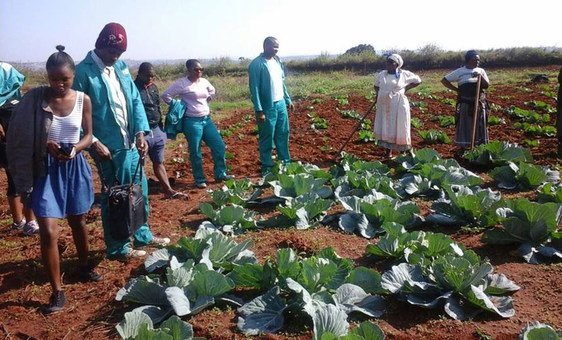
© SGP South Africa and Future Leaders of Change | Through the SGP support the Climate Change Warriors Project (CCWP) was able to establish six small-scale conservation agriculture co-operatives and coordinate youth training on sustainable agriculture.
Other students have established agricultural co-operatives and learnt how to farm sustainably in the face of the effects of climate change and the degradation of the environment.
On International Youth Day which is marked annually on 12 August, find out here how South Africa’s youth are mobilizing to take climate action.
The Projects in South Africa are supported by UNDP’s Small Grants Programme.
Climate Change
Schools in South Africa have been designating students as “eco-warriors” as part of an initiative supported by the UN Development Programme (UNDP), to drive environmental and climate change awareness amongst the young and old in their communities.
The youthful warriors have supported rubbish clean-up campaigns around their schools, eliminating over 1000 illegal dumping sites.
© SGP South Africa and Future Leaders of Change | Through the SGP support the Climate Change Warriors Project (CCWP) was able to establish six small-scale conservation agriculture co-operatives and coordinate youth training on sustainable agriculture.
Other students have established agricultural co-operatives and learnt how to farm sustainably in the face of the effects of climate change and the degradation of the environment.
On International Youth Day which is marked annually on 12 August, find out here how South Africa’s youth are mobilizing to take climate action.
The Projects in South Africa are supported by UNDP’s Small Grants Programme.
Sunday, August 4, 2019
Migration and the climate crisis: the UN’s search for solutions

Climate Change
Throughout human history, migration and climate have always been connected, but in the modern era, the impacts of the man-made climate crisis are likely to extensively change the patterns of human settlement.
Dina Ionesco is the head of the Migration, Environment and Climate Change Division at the UN International Organization for Migration (IOM), which has been at the forefront of efforts to study the links between migration, the environment and climate.
As she explained to UN News, we are now living in an era where catastrophic climate-related events are linked to human activity, and this is likely to have a major impact on the way that we decide to migrate, and settle:
“The Atlas of Environmental Migration, which gives examples dating as far back as 45,000 years ago, shows that environmental changes and natural disasters have played a role in how the population is distributed on our planet throughout history.”
“However, it is highly likely that undesirable environmental changes directly created by, or amplified by, climate change, will extensively change the patterns of human settlement. Future degradation of land used for agriculture and farming, the disruption of fragile ecosystems and the depletion of precious natural resources like fresh water will directly impact people's lives and homes.”
The climate crisis is already having an effect: according to the Internal Displacement Monitoring Centre, 17.2 million people had to leave their homes last year, because of disasters that negatively affected their lives. Slow changes in the environment, such as ocean acidification, desertification and coastal erosion, are also directly impacting people’s livelihoods and their capacity to survive in their places of origin.
As Ms. Ionesco explains, there is a strong possibility that more people will migrate in search of better opportunities, as living conditions get worse in their places of origin:
“There are predictions for the twenty-first century indicating that even more people will have to move as a result of these adverse climate impacts. The Intergovernmental Panel on Climate Change (IPCC), the main UN authority on climate science, has repeatedly said that the changes brought on by the climate crisis will influence migration patterns. The World Bank has put forward projections for internal climate migration amounting to 143 million people by 2050 in three regions of the world, if no climate action is taken.”
“However, our level of awareness and understanding of how environmental factors affect migration, and how they also interact with other migration drivers such as demographic, political and economic conditions, has also changed. With enhanced knowledge, there is more incentive to act urgently, be prepared and respond.”
The Global Compact for Migration: a roadmap for governments
In the past decade, there has been a growing political awareness of the issues around environmental migration, and increasing acceptance that this is a global challenge.
As a result, many states have signed up to landmark agreements, such as the Paris Climate Change Agreement, the Sendai Framework for Disaster Risk Reduction and the Global Compact for Migration, which, says, Ms. Ionesco, marks a clear way forward for governments to address the issue of climate and migration.
“The Compact contains many references to environmental migration including a whole section on measures to address environmental and climate challenges: it is the first time that a comprehensive vision has been laid out, showing how states can handle - now and in the future – the impacts of climate change, disasters and environmental degradation on international migration.”
“Our analysis of the Compact highlights the priorities of states, when it comes to addressing environmental migration. Their primary concern is to “minimize the adverse drivers and structural factors that compel people to leave their country of origin”, in particular the "natural disasters, the adverse effects of climate change, and environmental degradation".
“In other words, the main priority is to find solutions that allow people to stay in their homes and give them the means to adapt to changing environmental conditions. This approach aims to avoid instances of desperate migration and its associated tragedies.”
“However, where climate change impacts are too intense, another priority put forward in the Compact is to “enhance availability and flexibility of pathways for regular migration”. States are thus looking at solutions for people to be able to migrate safely and through regular channels, and at solutions for those already on the move.
“A last resort measure is to conduct planned relocations of population – this means organizing the relocation of entire villages and communities away from areas bearing the brunt of climate change impacts.”
“Humanitarian assistance and protection for those on the move already, are also tools states can use. Finally, states highlight that relevant data and knowledge are key to guide the decision-making process. Without knowing more and analyzing better, policies run the risk of missing their targets and fade into irrelevance.”
A range of solutions to a complex problem
Responding to the challenges of environmental migration in a way that benefits both countries and communities, including migrants and refugees, is a complex process, says Ms. Ionesco, involving many different actors.
Solutions can range from tweaking migration practices, such as visa regimes, to developing human rights-based protection measures. Most importantly, they involve a coordinated approach from national governments, bringing together experts from different walks of life:
“There is no one single solution to respond to the challenge of environmental migration, but there are many solutions that tackle different aspects of this complex equation. Nothing meaningful can ever be achieved without the strong involvement of civil society actors and the communities themselves who very often know what is best for them and their ways of life.”
"I also think that we need to stop discourses that focus only on migrants as victims of tragedy. The bigger picture is certainly bleak at times, but we need to remember that migrants demonstrate everyday their resilience and capacity to survive and thrive in difficult situations."
Wednesday, July 31, 2019
Turning waste into a business in the slums of Yaoundé, Cameroon

Economic Development
The increasing volume and complexity of waste associated with modern economies is posing a serious risk to ecosystems and human health. Every year, an estimated 11.2 billion tons of solid waste are collected worldwide, according to the UN Environment Programme.
Gamel Djouelde and his colleague are two of 60 young men who were trained and work with Tam Tam waste management in Melen. Every morning at 6 AM, they start collecting garbage in the community., by UN-Habitat/Kirsten Milhahn
For the past 20 years, a young man from the slums of Yaoundé, the capital of Cameroon, has been running a local waste collection service that has had a transformative impact on the community around him. The residential area of Melen, like most teeming city’s informal settlements, is not connected to the public garbage disposal system.
Through the Tam Tam Mobile, nearly every morning at 6 a.m., a team of young men from Melen make their way through the community. At the end of their shift, they unload their full carts at a municipal waste collection point outside the slum.
The Tam Tam Mobile initiative is supported by UN-Habitat, the United Nations programme working towards a better urban future. Read more here about this unique initiative
https://news.un.org/en/story/2019/07/1043541
Friday, July 26, 2019
Thursday, July 25, 2019
UN Women: Inclusive peace in Afghanistan means ‘women at the centre’ urges UN deputy chief in Kabul
UNAMA/Fardin Waezi
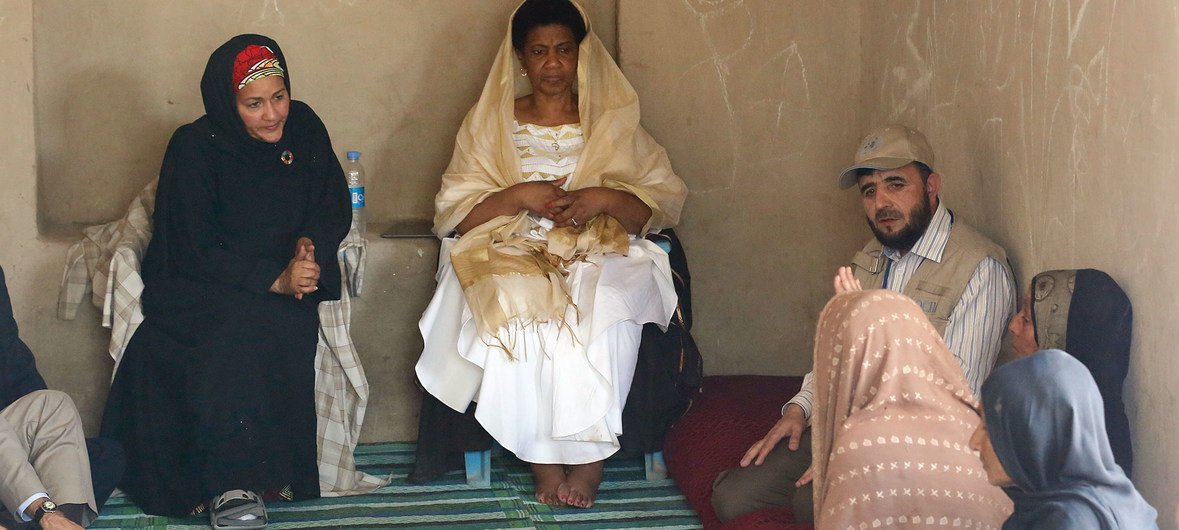
Deputy Secretary-General Amina Mohammed (left) and Phumzile Mlambo-Ngcuka (right), Executive Director of UN Women, visit a camp for internally displaced people (IDPs) in Kabul, Afghanistan. (21 July 2019)
Amina Mohammed was speaking to reporters in the capital Kabul, after leading an all-women delegation of top UN officials for an intensive two-day “solidarity mission”, focussed on women, peace and security. She was joined by UN Political and Peacebuilding Affairs chief, Rosemary DiCarlo, the Executive Director of the UN Population Fund (UNFPA), Natalia Kanem, and the head of UN Women, Phumzile Mlambo-Ngcuka.
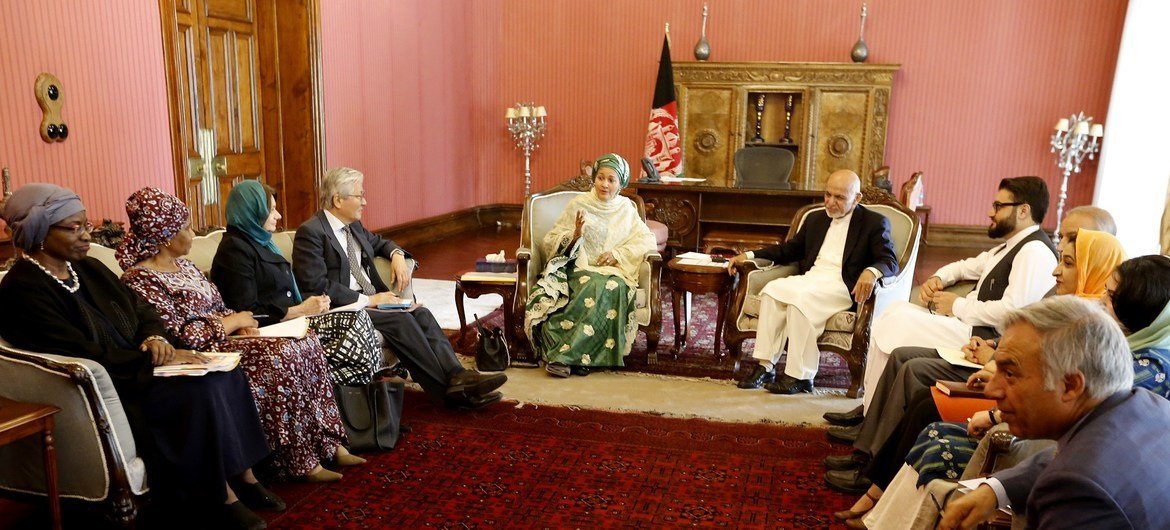
Fardin Waezi / UNAMA
United Nations Deputy Secretary General Amina J. Mohammed (Center -left) during a meeting with Afghanistan President Ashraf Ghani (center-right) in Kabul. (20th July 2019)
The Deputy Secretary-General said they had come ahead of the key presidential election, due to take place at the end of September, but also to lend their support for a peace process “which is integral to the future, and the sustainability of all the efforts and aspirations, the Government and people of Afghanistan have.”
Only a few days ago, a bomb attack just outside Kabul University, reportedly killed 10 people - students and a traffic officer - and wounded 33 others, while Taliban militants reportedly detonated a bomb outside police headquarters in Kandahar city, killing 11 and wounding nearly 90. Despite the on-going violence, Afghan political leaders held ground-breaking talks in Qatar earlier this week with Taliban representatives, with both sides calling for a reduction in civilian casualties.
“At the end of two days we have been impressed with the leadership at all levels of government from Kabul out to the local areas, where you see that there is an investment in people, in particular in women’s empowerment’, said Ms. Mohammed.
The high-level UN delegation held meetings with President Ashraf Ghani and Chief Executive Abdullah Abdullah on Saturday, and also met a diverse group of women, hosted by Afghanistan’s First Lady, Rula Ghani. They also met religious leaders, who have a crucial role to play in bolstering the peace process.
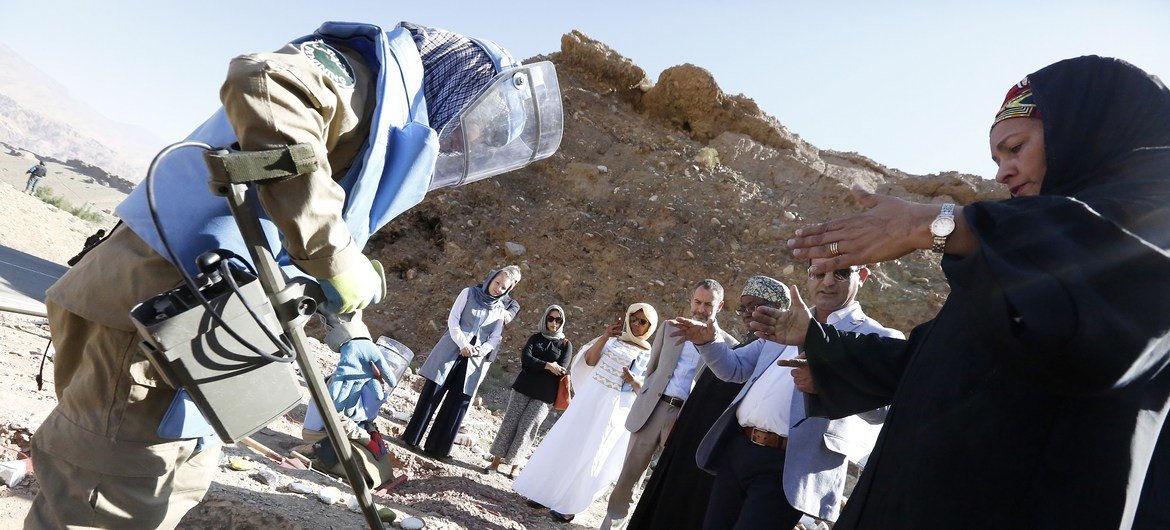
Fardin Waezi / UNAMA
UN Deputy Secretary General Amina J. Mohammed (right) speaks to deminers during a visit to demining site in Bamyan, Afghanistan. (21 July 2019)
On Sunday, the delegation travelled outside Kabul to the province of Bamyan, where UNFPA is running a series of support programmes and services for women of reproductive age and families, as well as tackling gender based violence (GBV). They also visited a UN demining site, and the UNESCOWorld Heritage Site of the Buddhas of Bamyan, which were dynamited and destroyed by the Taliban in March 2001, which ruled the country until the allied invasion later that year.
The deputy chief said her face-to-face conversations with Afghan women during the mission had left her with no doubt that women are “in leadership roles, decision making, they know exactly where they want to go - and what they need from us is support”, she told reporters.
“We have heard from them many messages: on the elections, that they must be credible, they must be timely, they must be inclusive, and their voices must be heard."
“On the peace process”, she continued, it had to be inclusive: “And inclusive means women at the centre”, especially when it comes to addressing the needs of victims of violence.
“You cannot address peace and its sustainability, if you cannot come to terms with reconciling the past. So this has been an incredibly important opportunity for us”, said the Deputy Secretary-General, noting that during the trip they had also been gratified to see “the gains of the investments that have been made by the UN system and its partners over the years.”
We'll back Afghan women 'at every step' - UN Women chief
The head of UN Women said that she had been struck by talking to women who had lived with the “oppressive legacy of the Taliban’s rule – which banned them from attending school, work or even speaking publicly or leaving the house without a man.”
“These same women have consistently and courageously advocated for their voices to be heard, their priorities to be addressed and their agency to be recognized”, said Ms. Mlambo-Ngcuka. “And they do not stand alone, because UN Women and the UN, are here to back them up at every step.”
She said that as the momentum builds for peace talks with the Taliban, “ensuring women’s meaningful participation in the peace and reconciliation process and in the upcoming elections is more urgent than ever. Women must be able to exercise their right to define what peace means for them, and to have a seat at the table where the future of the country is being negotiated”, said the Executive Director. “Only then we will really see durable peace and democracy flourish in Afghanistan.”
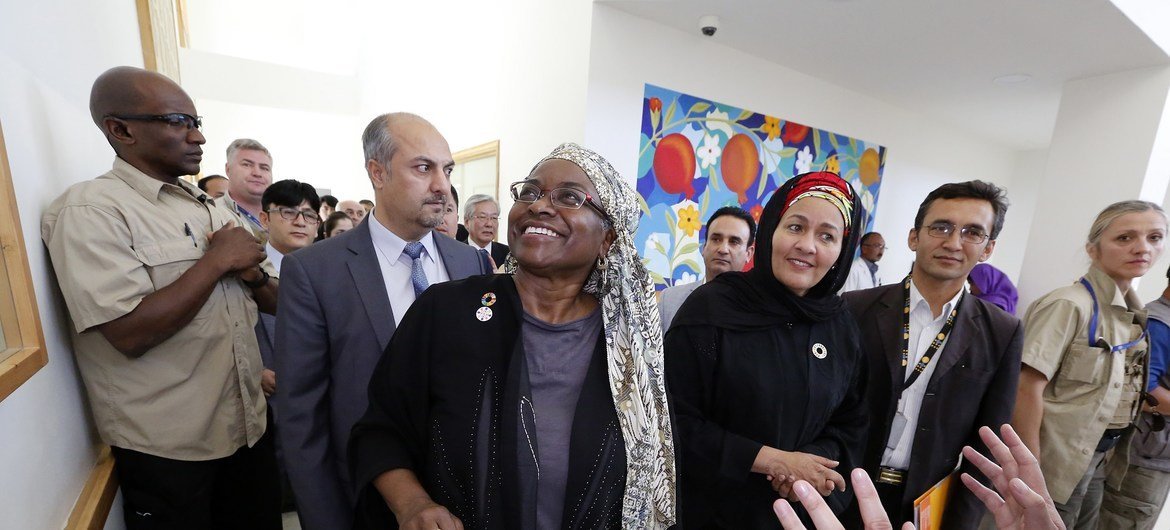
Fardin Waezi / UNAMA
UN Deputy Secretary General Amina J. Mohammed (3rd right) visits the Aga Khan Hospital in Bamyan, alongside UNFPA chief Natalia Kanem (centre). (21 Juy 2019)
‘Collective responsibility’ to end gender-based violence: UNFPA
In Bamyan, around half of the women who give birth, still deliver at home without any skilled birth attendant. GBV is a critical concern in the province, with around 20% of women experiencing some form of domestic violence, said UNFPA.
The agency runs a network of Family Protection Centres together with the Afghan Ministry of Public Health, within main hospital and health facilities. They also support more than 100 Family Health Houses, providing essential reproductive, maternal and child health services to around 300,000 living in under-served areas.
UNFPA chief, Natalia Kanem, said that “ending sexual and gender-based violence is our collective responsibility. It not only affects a woman’s dignity, health and wellbeing, but prevents her from participating actively in her community and contributing to peace.”
The agency, she added, “is on the frontlines of this battle in Afghanistan, and indeed around the world, leading the UN system’s response on the ground. If we stand united in our pursuit of gender equality, human rights and justice, we can prevent this scourge one person, one community, one country at a time.”
“Despite tremendous suffering, the resilience of the women and girls I met on this visit gave me hope for the future of Afghanistan”, said Ms. Kanem. UNFPA is “dedicated to improving the health and well-being of Afghan women, laying the foundation for a life of choice and equality. We are making progress, but there is still a long way to go.”
“Only when women are safe and empowered to make decisions over their bodies and lives”, she noted, “will the country be able to achieve sustainable development and peace.”
21 July 2019
Peace and Security
The UN deputy chief issued an impassioned plea on Sunday for Afghans to reconcile with the past and put “women at the centre” of all efforts to forge a durable peace, and a truly inclusive political process where women’s voices are truly heard.
Peace and Security
The UN deputy chief issued an impassioned plea on Sunday for Afghans to reconcile with the past and put “women at the centre” of all efforts to forge a durable peace, and a truly inclusive political process where women’s voices are truly heard.
Subscribe to:
Posts (Atom)
Sailing for Peace Coffee Talk

Climate Change Peace Building Adaptation Information Campaign Worldwide